

- University
- Academic
- Schools/Vocational Schools
- Vocational School of Justice
- Vocational School
- Vocational School
- Department of Banking and Insurance (Turkish)
- Department of Computer Programming (Turkish)
- Department of Foreign Trade (Turkish)
- Department of Graphic Design (Turkish)
- Department of Interior Design (Turkish)
- Department of Construction Technology (Turkish)
- Department of Occupational Health and Safety (Turkish)
- Department of Media and Communication (Turkish)
- Department of Architectural Restoration (Turkish)
- Department of Radio and Tv Programming (Turkish)
- Department of Civil Aviation Cabin Services (Turkish)
- Department of Civil Aviation Transportation Management (Turkish)
- Department of Tourism and Hotel Management (Turkish)
- Department of Applied English Translation
- Vocational School Of Health Services
- Vocational School Of Health Services
- Department of Child Development (Turkish)
- Department of Physiotherapy (Turkish)
- Department of Paramedic (Turkish)
- Department of Opticianry (Turkish)
- Department of Medical Documentation and Secreteriat (Turkish)
- Department of Medical Imaging Techniques (Turkish)
- Department of Medical Laboratory Techniques (Turkish)
- Department of Elderly Care (Turkish)
- School of Applied Management Sciences
- School of Foreign Languages
- Faculties
- Faculty of Arts and Sciences
- Faculty of Fine Arts and Design
- Faculty of Law
- Faculty of Communication
- Faculty of Business
- Faculty of Engineering
- Faculty of Engineering
- Department of Computer Engineering
- Department of Biomedical Engineering
- Department of Electrical and Electronics Engineering
- Department of Industrial Engineering
- Department of Food Engineering
- Department of Genetics and Bioengineering
- Department of Aerospace Engineering
- Department of Civil Engineering
- Department of Mechanical Engineering
- Department of Mechatronics Engineering
- Department of Software Engineering
- Faculty of Health Sciences
- Medicine
- Graduate School
- Common Courses
- Schools/Vocational Schools
- Research
- Research Centers
- Library
- Smart Campus
- Technology Transfer Office
- İzmir Sciencepark
- Continuous Education Center (EKOSEM)
- Children's University
- Ethics Committee
- Teaching and Learning Center (EKOEĞİTİM)
- Psychology Application and Research Center
- Researcher Training Coordinatorship
- Research Collaborations And Innovation Coordinatorship
- Campus
- INTERNATIONAL
- Contact
- 25TH YEAR
FACULTY OF FINE ARTS AND DESIGN
Department of Industrial DesignID 380 | Course Introduction and Application Information
| Course Name |
Biomaterials: Designing with Living Systems
|
|
Code
|
Semester
|
Theory
(hour/week) |
Application/Lab
(hour/week) |
Local Credits
|
ECTS
|
|
ID 380
|
Fall/Spring
|
2
|
2
|
3
|
4
|
| Prerequisites |
None
|
|||||
| Course Language |
English
|
|||||
| Course Type |
Elective
|
|||||
| Course Level |
First Cycle
|
|||||
| Mode of Delivery | - | |||||
| Teaching Methods and Techniques of the Course | Application: Experiment / Laboratory / WorkshopLecture / Presentation | |||||
| National Occupation Classification | - | |||||
| Course Coordinator | ||||||
| Course Lecturer(s) | ||||||
| Assistant(s) | - | |||||
| Course Objectives | Understanding how and what influences form in a biological system; Finding (noninvasive) tools and methods to manipulate form in a biological system;\nDesigning new forms in/with biological systems\n\nUnderstanding how and what influences form in a biological system;\nFinding (noninvasive) tools and methods to manipulate form in a biological system;\nDesigning new forms in/with biological systems |
| Learning Outcomes |
The students who succeeded in this course;
|
| Course Description | Presenting case studies of biological systems that have been hacked or manipulated; making field research for the observation of living systems (how flowers bloom, how trees grow, how insects dig, etc.); making experiments and sketching to forecast the action of the foreign agents on the system; designing new systems for form generating. |
| Related Sustainable Development Goals |
|
|
|
Core Courses | |
| Major Area Courses | ||
| Supportive Courses |
X
|
|
| Media and Management Skills Courses | ||
| Transferable Skill Courses |
WEEKLY SUBJECTS AND RELATED PREPARATION STUDIES
| Week | Subjects | Related Preparation |
| 1 | Introduction (General overview); Unveiling concepts of hyperobjects, holistic approach,design for interspecies collaboration and sustainability; Assignment of homeworks / Introduction to project assignments. | None |
| 2 | Biological system: concepts and definitions; Identifying hackable systems and agents that influence form-shaping in the presented systems. Design methodology in/for/with Nature. / Assignment 01 - Subject definition for a Collaborative Project | See - Documentary I: David Attenborough: A Life on Our Planet (2020) / Order 2 Mushroom Kits |
| 3 | Correlation between foreign agents’ activities and form-shaping: geometries, colors, textures, etc. / Nurture vs Nature. Fungi as a biological agent. / PRESENTATION AND DISCUSSION of the group research – brainstorming in class; | See - Documentary 2: Connected: The Hidden Science of Everything (2020) episode I and III |
| 4 | “Workshop” on how to collaborate with fungi; Ethics, deontology and aesthetics; Phenotype and genotype / PROJECT 01 SUBMISSION AND APPLICATION | See - Documentary 3: Rotten (2018) episode II and IV / Photo/Sketch and emotional daily log |
| 5 | Mind mapping and strategies to reverse engineer complex artifacts / Levels of interaction and influence on growth / Generating narratives through visualization. | Photo/Sketch and emotional daily log / Assignment 02 - Nurturing a living system |
| 6 | System design and designed by the system / Domestication / Human vs natural design | Photo/Sketch and emotional daily log / Terminating a living system |
| 7 | Ripple effect / Perspective, scales / Sensing vs visualizing / Small actions have big consequences. | Photo/Sketch and emotional daily log |
| 8 | Midterm Week | |
| 9 | Progress report | See - Documentary 4: Abstract: The Art of Design (2017) / Photo/Sketch and emotional daily log / Presentation / Simulation: manipulation of the biological system - expected results |
| 10 | Assignment 02: PRESENTATION AND DISCUSSION of the system design | See Documentary 5 - Anthropocene: The Human Epoch (2018) / Photo/Sketch and emotional daily log |
| 11 | Breaking the system into levels of design in/with/for nature - identifying opportunities and bottle-necks | Photo/Sketch and emotional daily log. |
| 12 | The materiality of matter | See Documentary 6 - Abstract: The Art of Design (Neri Oxman: Bio-Architecture) (2020) / Photo/Sketch and emotional daily log |
| 13 | Looking for the impossible – creating scenarios / Design - “selling a concept” (elevators pitch) | Photo/Sketch and emotional daily log. |
| 14 | Out of control - identifying potential collaborations / Evaluating outcomes. | Photo/Sketch and emotional daily log. |
| 15 | PROJECT 02 SUBMISSION | All elements required for a correct understanding and demonstration of the project. |
| 16 | Review of the Semester | None |
| Course Notes/Textbooks | Lecture Notes. |
| Suggested Readings/Materials | Munari, Bruno. Design as Art. Translated by Patrick Creagh. London: Penguin Books, 2008. Thompson, D'Arcy Wentworth. On Growth and Form. Cambridge: Cambridge University Press, 1917. Simon, Herbert A. The Sciences of the Artificial: Massachusetts Instituite of Technology, 1996. Antonelli, Paola. Bio Design: Nature + Science + Creativity: Thames & Hudson Ltd, London 2012. |
EVALUATION SYSTEM
| Semester Activities | Number | Weigthing |
| Participation |
1
|
10
|
| Laboratory / Application |
1
|
30
|
| Field Work | ||
| Quizzes / Studio Critiques | ||
| Portfolio | ||
| Homework / Assignments |
2
|
15
|
| Presentation / Jury | ||
| Project |
2
|
45
|
| Seminar / Workshop | ||
| Oral Exams | ||
| Midterm | ||
| Final Exam | ||
| Total |
| Weighting of Semester Activities on the Final Grade |
6
|
100
|
| Weighting of End-of-Semester Activities on the Final Grade | ||
| Total |
ECTS / WORKLOAD TABLE
| Semester Activities | Number | Duration (Hours) | Workload |
|---|---|---|---|
| Theoretical Course Hours (Including exam week: 16 x total hours) |
16
|
2
|
32
|
| Laboratory / Application Hours |
16
|
2
|
32
|
| Study Hours Out of Class |
8
|
2
|
16
|
| Field Work |
0
|
||
| Quizzes / Studio Critiques |
0
|
||
| Portfolio |
0
|
||
| Homework / Assignments |
2
|
5
|
10
|
| Presentation / Jury |
0
|
||
| Project |
2
|
15
|
30
|
| Seminar / Workshop |
0
|
||
| Oral Exam |
0
|
||
| Midterms |
0
|
||
| Final Exam |
0
|
||
| Total |
120
|
COURSE LEARNING OUTCOMES AND PROGRAM QUALIFICATIONS RELATIONSHIP
|
#
|
Program Competencies/Outcomes |
* Contribution Level
|
||||||
|
1
|
2
|
3
|
4
|
5
|
||||
| 1 |
|
-
|
-
|
-
|
-
|
-
|
||
| 2 |
|
-
|
-
|
-
|
-
|
-
|
||
| 3 |
|
-
|
-
|
X
|
-
|
-
|
||
| 4 |
|
-
|
-
|
-
|
-
|
-
|
||
| 5 |
|
-
|
-
|
-
|
-
|
-
|
||
| 6 |
|
-
|
X
|
-
|
-
|
-
|
||
| 7 |
|
-
|
X
|
-
|
-
|
-
|
||
| 8 |
|
-
|
-
|
-
|
-
|
-
|
||
| 9 |
|
-
|
-
|
-
|
-
|
-
|
||
| 10 |
|
-
|
-
|
X
|
-
|
-
|
||
| 11 |
|
-
|
-
|
-
|
-
|
-
|
||
| 12 |
|
-
|
-
|
-
|
-
|
-
|
||
| 13 |
|
-
|
-
|
-
|
-
|
-
|
||
*1 Lowest, 2 Low, 3 Average, 4 High, 5 Highest













NEWSALL NEWS



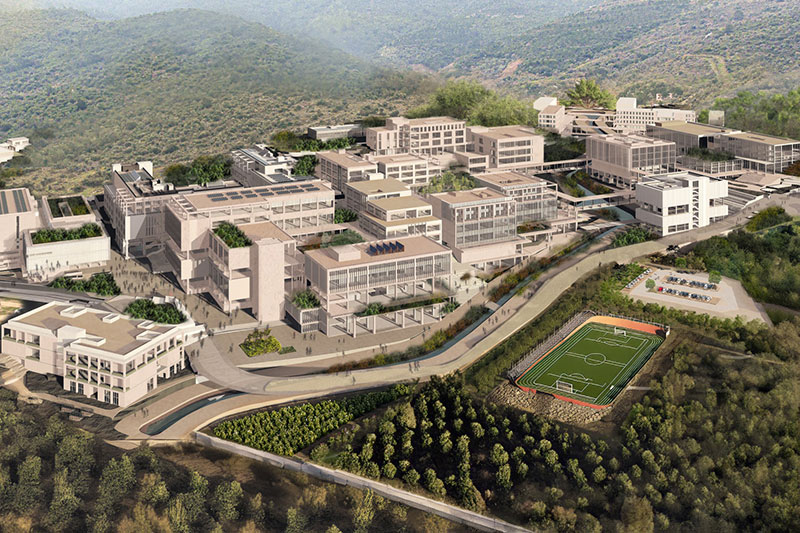
IZMIR UNIVERSITY OF ECONOMICS GÜZELBAHÇE CAMPUS
DetailsGLOBAL CAREER
As Izmir University of Economics transforms into a world-class university, it also raises successful young people with global competence.
More..CONTRIBUTION TO SCIENCE
Izmir University of Economics produces qualified knowledge and competent technologies.
More..VALUING PEOPLE
Izmir University of Economics sees producing social benefit as its reason for existence.
More..
You are one step ahead with your graduate education at Izmir University of Economics.