

Logo
My IEU Logo
TR
University
President
Rector
History
Board of Trustees
Administrative Staff
Rectorate
Mission
Scholarship
Collaborations
Quality Structuring at IUE
Bylaws / Regulations
Awards
Protection of Personal Data
Gender Equality Plan
Principles and Policies
Academic
Schools
Faculties
Graduate School
Common Courses
  • Vocational School of Justice
  • Vocational School
  • Vocational School of Health Services
  • School of Applied Management Sciences
  • School of Foreign Languages
  • Faculty of Arts and Sciences
  • Faculty of Fine Arts and Design
  • Faculty of Law
  • Faculty of Communication
  • Faculty of Business
  • Faculty of Engineering
  • Faculty of Health Sciences
  • Faculty of Medicine
  • Graduate School
  • Master's Programs in Economics
  • Master's Programs in Law
  • Master's Programs in Communication
  • Graduate Programs in Business
  • Master's Programs in Logistics
  • Graduate Programs in Mathematics
  • Master's Programs in Architecture
  • Graduate Programs in Engineering
  • Graduate Programs in Psychology
  • Health Field
  • Political Science and International Relations Field
  • Master's Programs in Sustainable Energy
  • Graduate Programs in Design Studies
  • Graduate Programs in Foreign Languages
Research
Research Centers
Library
Smart Campus
Technology Transfer Office
İzmir Science Park
Continuous Education Center (EKOSEM)
Children's University
Researcher Training Coordinatorship
Ethics Committee
Teaching and Learning Center (EKOEĞİTİM)
Psychology Application and Research Center
Research Collaborations And Innovation Coordinatorship
Campus
Life at IUE
İzmir
Library
Dormitories and Accommodation
Cafes and Restaurants
Student Clubs
IUE Publisher
Disability Support Center
Health and Counseling Services
INTERNATIONAL
Contact
İzmir Ekonomi Üniversitesi
  • University
    • President
    • Rector
    • History
    • Board of Trustees
    • Administrative Staff
    • Rectorate
    • Mission
    • Scholarship
    • Collabrations
    • Quality Structuring at IUE
    • Bylaws and Regulations
    • Rewards
    • Protection of Personal Data
    • Gender Equality Plan
    • Principles and Policies
  • Academic
    • Schools/Vocational Schools
      • Vocational School of Justice
        • Vocational School of Justice
        • Department of Justice (Turkish)
        • Department of Legal Office Management and Secretariat
      • Vocational School
        • Vocational School
        • Department of Banking and Insurance (Turkish)
        • Department of Computer Programming (Turkish)
        • Department of Foreign Trade (Turkish)
        • Department of Graphic Design (Turkish)
        • Department of Interior Design (Turkish)
        • Department of Construction Technology (Turkish)
        • Department of Occupational Health and Safety (Turkish)
        • Department of Media and Communication (Turkish)
        • Department of Architectural Restoration (Turkish)
        • Department of Radio and Tv Programming (Turkish)
        • Department of Civil Aviation Cabin Services (Turkish)
        • Department of Civil Aviation Transportation Management (Turkish)
        • Department of Tourism and Hotel Management (Turkish)
        • Department of Applied English Translation
      • Vocational School Of Health Services
        • Vocational School Of Health Services
        • Department of Child Development (Turkish)
        • Department of Physiotherapy (Turkish)
        • Department of Paramedic (Turkish)
        • Department of Opticianry (Turkish)
        • Department of Medical Documentation and Secreteriat (Turkish)
        • Department of Medical Imaging Techniques (Turkish)
        • Department of Medical Laboratory Techniques (Turkish)
        • Department of Elderly Care (Turkish)
      • School of Applied Management Sciences
        • School of Applied Management Sciences
        • Gastronomy and Culinary Arts Program
      • School of Foreign Languages
    • Faculties
      • Faculty of Arts and Sciences
        • Faculty of Arts and Sciences
        • Department of Physics
        • Department of Mathematics
        • Department of English Translation and Interpreting
        • Department of Psychology
        • Department of Sociology
      • Faculty of Fine Arts and Design
        • Faculty of Fine Arts and Design
        • Department of Industrial Design
        • Department of Visual Communication Design
        • Department of Interior Architecture and Environmental Design
        • Department of Architecture
        • Department of Textile and Fashion Design
      • Faculty of Law
      • Faculty of Communication
        • Faculty of Communication
        • Department of Public Relations and Advertising
        • Department of Cinema and Digital Media
        • Department of New Media and Communication
      • Faculty of Business
        • Faculty of Business
        • Department of Economics
        • Department of Business Administration
        • Department of Logistics Management
        • Accounting and Auditing Program
        • Department of Political Science and International Relations
        • Department of International Trade and Finance
      • Faculty of Engineering
        • Faculty of Engineering
        • Department of Computer Engineering
        • Department of Biomedical Engineering
        • Department of Electrical and Electronics Engineering
        • Department of Industrial Engineering
        • Department of Food Engineering
        • Department of Genetics and Bioengineering
        • Department of Aerospace Engineering
        • Department of Civil Engineering
        • Department of Mechanical Engineering
        • Department of Mechatronics Engineering
        • Department of Software Engineering
      • Faculty of Health Sciences
        • Faculty of Health Sciences
        • Department of Physiotherapy and Rehabilitation
        • Department of Nursing
        • Department of Nutrition and Dietetics
      • Medicine
    • Graduate School
    • Common Courses
  • Research
    • Research Centers
    • Library
    • Smart Campus
    • Technology Transfer Office
    • İzmir Sciencepark
    • Continuous Education Center (EKOSEM)
    • Children's University
    • Ethics Committee
    • Teaching and Learning Center (EKOEĞİTİM)
    • Psychology Application and Research Center
    • Researcher Training Coordinatorship
    • Research Collaborations And Innovation Coordinatorship
  • Campus
    • Life at IUE
    • İzmir
    • Library
    • Health and Counseling Services
    • Dormitories and Accommodation
    • Cafes and Restaurants
    • Student Clubs
    • Disability Support Center
    • IUE Publisher
  • INTERNATIONAL
  • Contact
  • TÜRKÇE

  • Prospective Student | Student | Alumni

      Search Results...

      FACULTY OF FINE ARTS AND DESIGN

      Department of Industrial Design

      Menu
      • Main Page
      • About Us
      • Academic
        • Education Objectives
        • Academic Staff
        • Academic Administration
        • Curriculum
        • Graduate Programs
          • Design Studies (With Thesis)
          • Ph.d. In Design Studies
        • Internship
        • Double Major Program and Minor Program
        • Erasmus
      • Alumni
      • General Education Courses
      • Awards
      • Activities
        • Workshops and Seminars
        • Technical Trips
      • Visual Archive
        • Video Archive
      • All News
      • F.A.Q
      • Ethics In Design
      • Contact

      ID 400 | Course Introduction and Application Information

      Course Name
      Fantastic Design Illustration
      Code
      Semester
      Theory
      (hour/week)
      Application/Lab
      (hour/week)
      Local Credits
      ECTS
      ID 400
      Fall/Spring
      2
      2
      3
      4

      Prerequisites
      None
      Course Language
      English
      Course Type
      Elective
      Course Level
      First Cycle
      Mode of Delivery -
      Teaching Methods and Techniques of the Course Discussion
      Problem Solving
      Critical feedback
      Field trip / Observation
      Application: Experiment / Laboratory / Workshop
      Lecture / Presentation
      National Occupation Classification -
      Course Coordinator
      • Öğr.Gör.Dr. KARDELEN AYSEL
      Course Lecturer(s)
      • Öğr.Gör.Dr. KARDELEN AYSEL
      Assistant(s) -
      Course Objectives This course aims to teach the student’s traditional fine art and design skills in computer environment to create fantastic illustrations
      Learning Outcomes

      The students who succeeded in this course;

      • Student will be able to apply drawing techniques.
      • Student will be able to apply concept drawing and painting techniques.
      • Student will be able to create concept illustrations in computer environment.
      • Student will be able to translate the ready to use visuals into the illustrations.
      • Student will be able to add texture, light and environments in to the illustrations.
      Course Description This course aims to teach the student’s traditional fine art and design skills in computer environment to create fantastic illustrations. In the course, the students will learn to use their fine art and design skills in digital environment and then creating fantastic illustrations with them.
      Related Sustainable Development Goals


      Course Category

      Core Courses
      Major Area Courses
      Supportive Courses
      X
      Media and Management Skills Courses
      Transferable Skill Courses


      WEEKLY SUBJECTS AND RELATED PREPARATION STUDIES

      Week Subjects Related Preparation
      1 Course Overview and Character Sheet Warm-up. Module 00: Visual Metaphors - Identity Mapping Exercise. Materials: Character Sheet and Mindmapping Guide (Handouts), Basic Pens. Homework: Sketchbook Design (The Personal Grimoire). Character Sheet and Mindmapping Guide (Handouts).
      2 Module 00 continued. Sketchbook Design Presentations and Peer Review (Gallery Walk). Introduction to Project 01: The Codenames Adaptation (Style Heist). Materials: Homework: The Codenames Pictures Adaptation (3 illustrations in assigned style). Sketchbook, Style Checklist A3, Doodling Exercise Sheets.
      3 Submission of Codenames Project. Mini-presentations of assigned styles. In-class Doodling Sprint (Muscle Memory and Textures). Introduction to Module 01: The Mythmaker’s Toolkit (Legends and Lines). Completed Codenames project, Doodling Sheets.
      4 Module 01: Storytelling and Narrative Composition. In-class Exercise: One-page Silent Comic (Using Emotion Cards). Introduction to Project 02: The Personal Oracle (Custom Dixit Card). Emotion Cards, A4 paper, Sketchbook, Inks.
      5 Module 01 continued. Dixit Project Studio Session 01. Focus on Symbolic Composition, Atmospheric Depth, and Visual Hooks. Dixit Card Template, Sketchbook, Mixed Media.
      6 Submission of Project 02 (Dixit Card). Testing the visual metaphors through a Dixit tournament. Finalized Dixit Cards, Peer evaluation forms.
      7 Module 02: Speculative Design and Imaginary Taxonomy. Lecture based on Codex Seraphinianus and Alien Worlds. Introduction to Project 02: The Speculative Archive (Organisms and Artifacts). Sketchbook, Speculative Design Brief.
      8 Midterm Week None
      9 Module 02 continued. Studio Session 01. Focus on Speculative Anatomy (Alien Worlds logic) and Impossible Functionalism (Codex style). Designing the "Companion" and the "Tool". Sketchbook, Drafting tools, Pens.
      10 Submission of Project 02. Presentation of the Speculative Organism and its corresponding Industrial Interface. Midterm progress review. Completed Codex-style illustrations.
      11 Module 03: Environmental Design and Cinematic Framing. Integration of Character, Organism, and Artifact into a world. Lecture on Love, Death and Robots aesthetics. Introduction to Final Project: The Ultimate Scene. Large scale sketchbook pages, announced drawing tools.
      12 Module 03 continued. Discussion: AI in Illustration (Based on Cyberpunk Momotaro). Refining the composition and cinematic lighting of the ultimate scene. Final illustration tools (Analog/Digital).
      13 Final Project Studio Session 02. Finalizing rendering, textures, and the narrative integration of all semester elements. Final illustration tools (Analog/Digital).
      14 Submission of the Final Project (The Ultimate Scene). Collecting all previous exercises and projects into the Sketchbook (The Grimoire). Final desk crits. Completed Final Piece, Physical Sketchbook.
      15 One-on-one portfolio refinement. Designing the visual narrative of the "Personal Grimoire." Exhibition layout and mounting. All semester work, Portfolio folder.
      16 Final Jury and Presentation. Final Portfolio, Exhibition setup.


      Course Notes/Textbooks

      Gurney, J. (2009). Imaginative realism: How to paint what doesn’t exist. Andrews McMeel Publishing.

      Note: This is the "bible" for fantastic illustration. It teaches students how to use real-world physics, lighting, and anatomy to make impossible worlds look believable—a crucial skill for both ID and VCD students.

      Kowalski, J. (Ed.). (2020). Enchanted: A history of fantasy illustration. Abbeville Press.

      Note: This book is an essential historical survey that traces fantasy art from the Old Masters to contemporary icons like Frank Frazetta and Victo Ngai. It is particularly important for the "Basics" and "History" modules of the course, as it provides students with a vast visual library of how mythology, fables, and modern epics have been visualized across different eras and styles.

      Mead, S. (2017). The movie art of Syd Mead: Visual futurist. Titan Books.

      Note: As a legendary industrial designer turned concept artist (Blade Runner, Tron), Mead’s work shows ID students how professional product design principles can be used to create iconic sci-fi environments and vehicles.

      Serafini, L. (1981). Codex Seraphinianus. Franco Maria Ricci.

      Note: This encyclopedia of an imaginary world challenges students to think beyond known taxonomy and functional logic. It’s a masterclass in surrealism and "impossible" industrial design.

      Rootport. (2023). Cyberpunk Momotaro. Shinchosha.

      Note: Being the first manga fully illustrated using AI (Midjourney), it serves as a critical case study for modern VCD students to discuss the intersection of human creativity, prompt engineering, and the future of digital art.

      Suggested Readings/Materials

      Visual Narratives & Graphic Novels

      Stålenhag, S. (2014). Tales from the loop. Free League Publishing.

      Note: Stålenhag excels at "Retro-futurism," blending everyday industrial machines with fantastic technology. It’s a perfect reference for integrating fantastic elements into realistic settings.

      Moebius (Giraud, J.). (1987). The world of Edena. Marvel Entertainment Group.

      Note: Moebius’s use of "clear line" style and surrealist compositions is essential for ID and VCD students focusing on visual economy and world-building through line-work.


      Interactive Media & Games (Visual Semiotics)

      Roubira, J. L. (2008). Dixit [Board Game]. Libellud.

      Note: Used as a workshop tool to enhance associative thinking. It teaches students how a single illustration can convey multiple, abstract meanings.

      Chvátil, V. (2016). Codenames: Pictures [Board Game]. Czech Games Edition.

      Note: Trains students in visual decoding and semiotics—understanding how simple icons or illustrations can represent complex concepts.


      Video Material (Documentary & Series)

      Miller, T., & Fincher, D. (Executive Producers). (2019–present). Love, death & robots [TV series]. Netflix.**

      Note: An anthology of various animation styles (from photorealism to stylized 2D). It serves as a visual catalog of modern fantastic storytelling techniques. Specifically, the episodes “The Witness” and “Zima Blue” will be used as a discussion material within class.

      Wallbank, S. (Director). (2020). Alien worlds [TV series]. Netflix.

      Note: A brilliant resource for "Speculative Biology." It teaches ID and VCD students how to design creatures and environments based on scientific constraints (gravity, atmosphere, light).


      EVALUATION SYSTEM

      Semester Activities Number Weigthing
      Participation
      1
      10
      Laboratory / Application
      1
      20
      Field Work
      Quizzes / Studio Critiques
      Portfolio
      Homework / Assignments
      Presentation / Jury
      Project
      5
      70
      Seminar / Workshop
      Oral Exams
      Midterm
      Final Exam
      Total

      Weighting of Semester Activities on the Final Grade
      7
      100
      Weighting of End-of-Semester Activities on the Final Grade
      -
      -
      Total

      ECTS / WORKLOAD TABLE

      Semester Activities Number Duration (Hours) Workload
      Theoretical Course Hours
      (Including exam week: 16 x total hours)
      16
      4
      64
      Laboratory / Application Hours
      (Including exam week: '.16.' x total hours)
      16
      1
      16
      Study Hours Out of Class
      0
      Field Work
      0
      Quizzes / Studio Critiques
      0
      Portfolio
      0
      Homework / Assignments
      0
      Presentation / Jury
      0
      Project
      5
      4
      20
      Seminar / Workshop
      0
      Oral Exam
      0
      Midterms
      0
      Final Exam
      0
          Total
      100


      COURSE LEARNING OUTCOMES AND PROGRAM QUALIFICATIONS RELATIONSHIP

      #
      Program Competencies/Outcomes
      * Contribution Level
      1
      2
      3
      4
      5
      1

      To be able to equipped with theoretical and practical knowledge of industrial design, and to apply it to a variety of products, services and systems from conventional industries to urban scale with innovative and sustainable approaches

      X
      -
      -
      -
      -
      2

      To be able to communicate design concepts and proposals for solutions, which are supported with quantitative and qualitative data, to specialists and non-specialists through visual, written, and oral means

      -
      -
      X
      -
      -
      3

      To be able to equipped with the related theoretical and methodological knowledge of engineering, management, and visual communication that is required for interdisciplinary characteristic of industrial design; and to collaborate with other disciplines, organizations, or companies

      -
      -
      -
      X
      -
      4

      To be able to equipped with the knowledge of history and theory of design, arts and crafts; and culture of industrial design

      X
      -
      -
      -
      -
      5

      To be able to equipped with social, cultural, economic, environmental, legal, scientific and ethical values in the accumulation, interpretation and/or application of disciplinary information and to employ these values regarding different needs

      -
      -
      X
      -
      -
      6

      To be able to develop contemporary approaches individually and as a team member to solve today’s problems in the practice of industrial design

      -
      X
      -
      -
      -
      7

      To be able to define design problems within their contexts and circumstances, and to propose solutions for them within the discipline of industrial design considering materials, production technologies and ergonomics

      X
      -
      -
      -
      -
      8

      To be able to use digital information and communication technologies, physical model making techniques and machinery, at an adequate level to the discipline of industrial design

      -
      -
      X
      -
      -
      9

      To be able to employ design research and methods within the theory and practice of industrial design

      X
      -
      -
      -
      -
      10

      To be able to recognize the need and importance of a personal lifelong learning attitude towards their chosen specialization area within the industrial design field

      -
      -
      -
      -
      X
      11

      To be able to collect data in the areas of industrial design and communicate with colleagues in a foreign language ("European Language Portfolio Global Scale", Level B1)

      -
      X
      -
      -
      -
      12

      To be able to speak a second foreign language at a medium level of fluency efficiently

      -
      -
      -
      -
      X
      13

      To be able to relate the knowledge accumulated throughout the human history to their field of expertise

      -
      -
      -
      -
      X

      *1 Lowest, 2 Low, 3 Average, 4 High, 5 Highest


      NEWSALL NEWS

      Coastal Cleanup for a World Record
      Coastal Cleanup for a World Record

      Izmir University of Economics (IUE) and Izmir Metropolitan Municipality have joined forces to support the coastal cleanup movement initiated by ...

      Related SDG:
      11
      13
      14
      17
      Detail
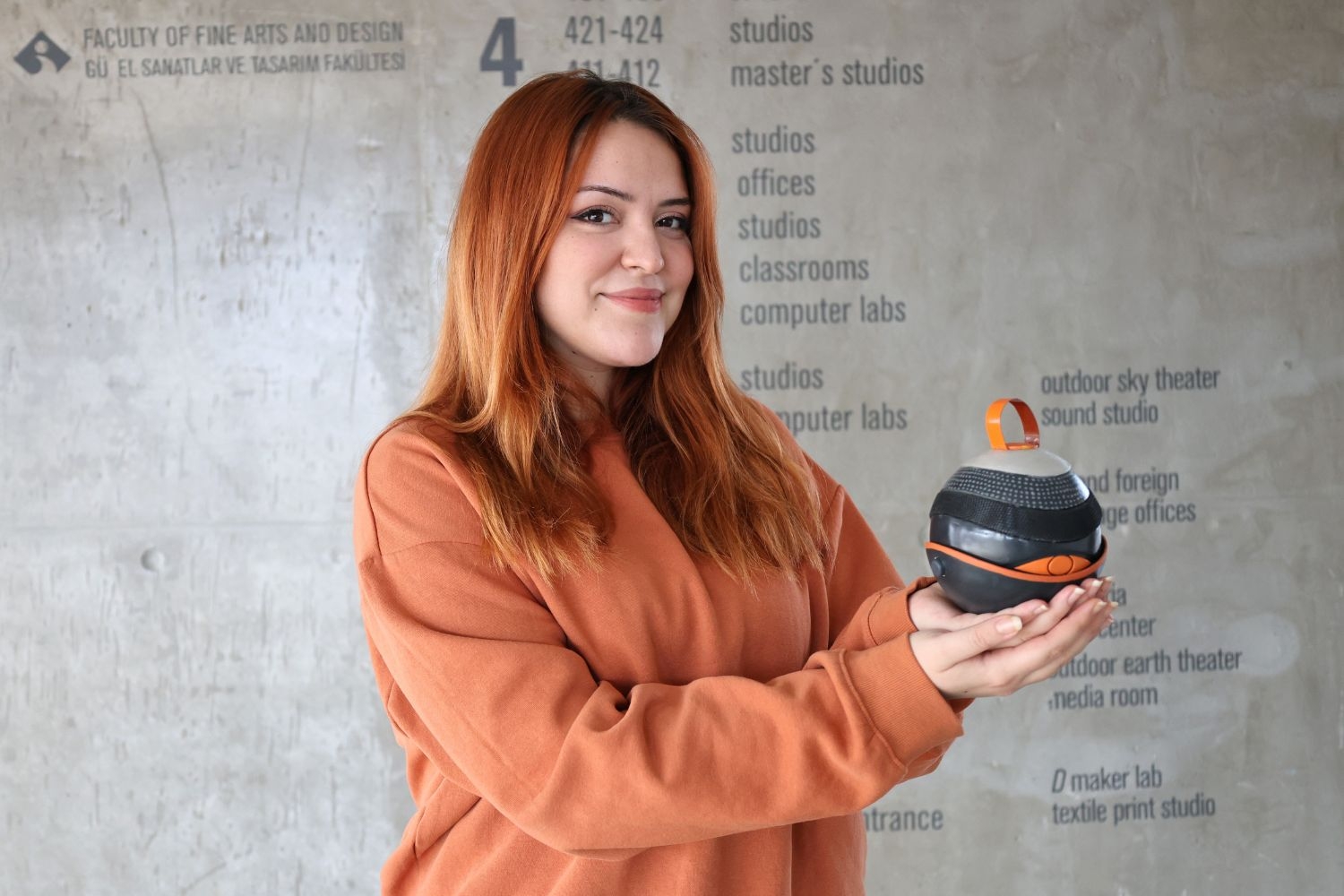
      ‘Diren’ Contribution to Disaster Response
      ‘Diren’ Contribution to Disaster Response

      Bade Ruşen Karadeniz, a student at Izmir University of Economics (IUE) Department of Industrial Design, has developed a special device ...

      Related SDG:
      4
      9
      11
      12
      Detail
      International Success with ‘Octopresso’
      International Success with ‘Octopresso’

      Irmak Koluman, a student from Department of Industrial Design, Izmir University of Economics (IUE), has been awarded at the international ...

      Detail
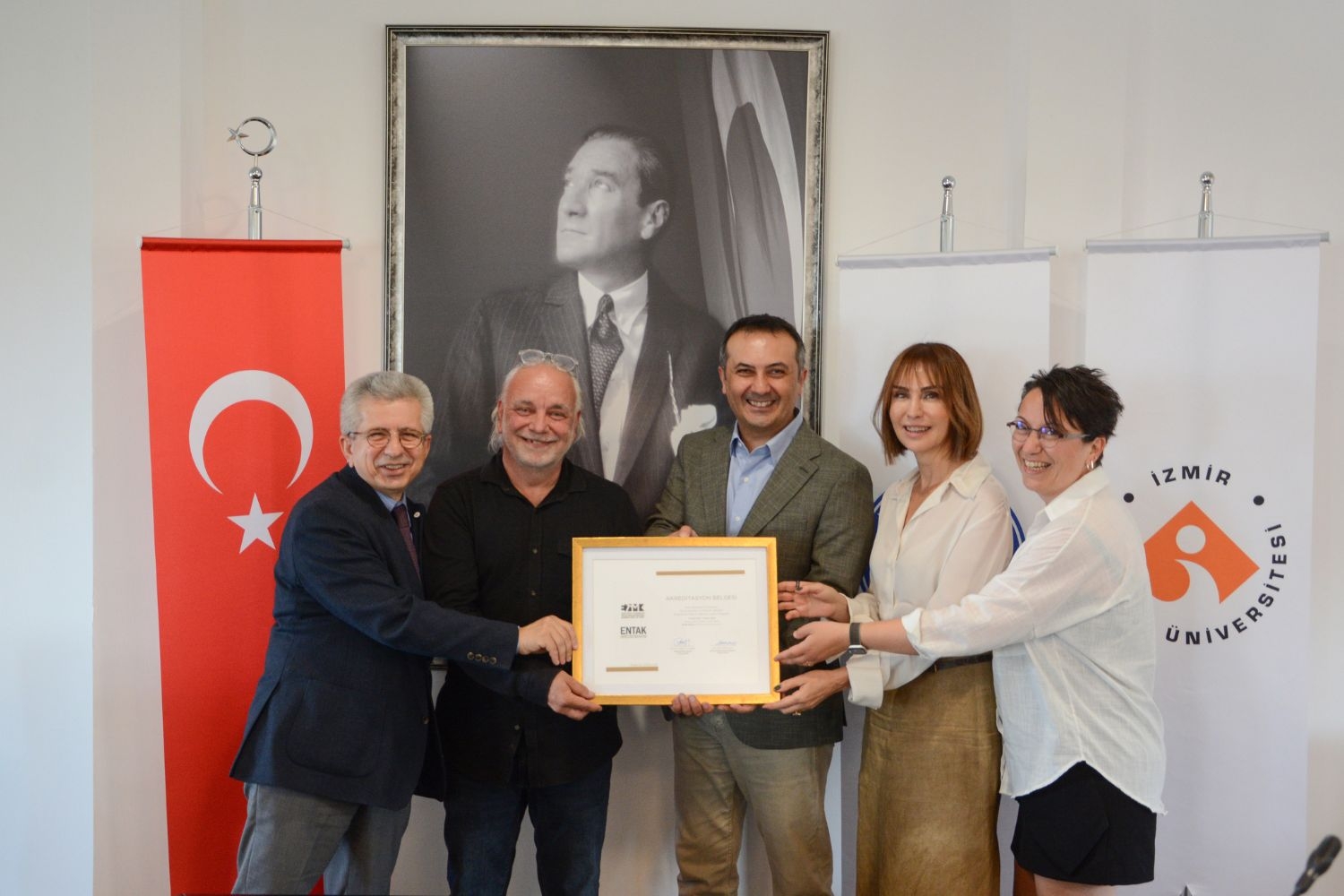
      ‘Registered’ success
      ‘Registered’ success

      Izmir University of Econmics (IUE) Department of Industrial Design has added another success to its achievements by receiving full accreditation ...

      Detail
      Jewelry designs brought awards
      Jewelry designs brought awards

      İbrahim Burak Ünal, a student in the Department of Industrial Design, Izmir University of Economics (IUE) won second place with ...

      Detail
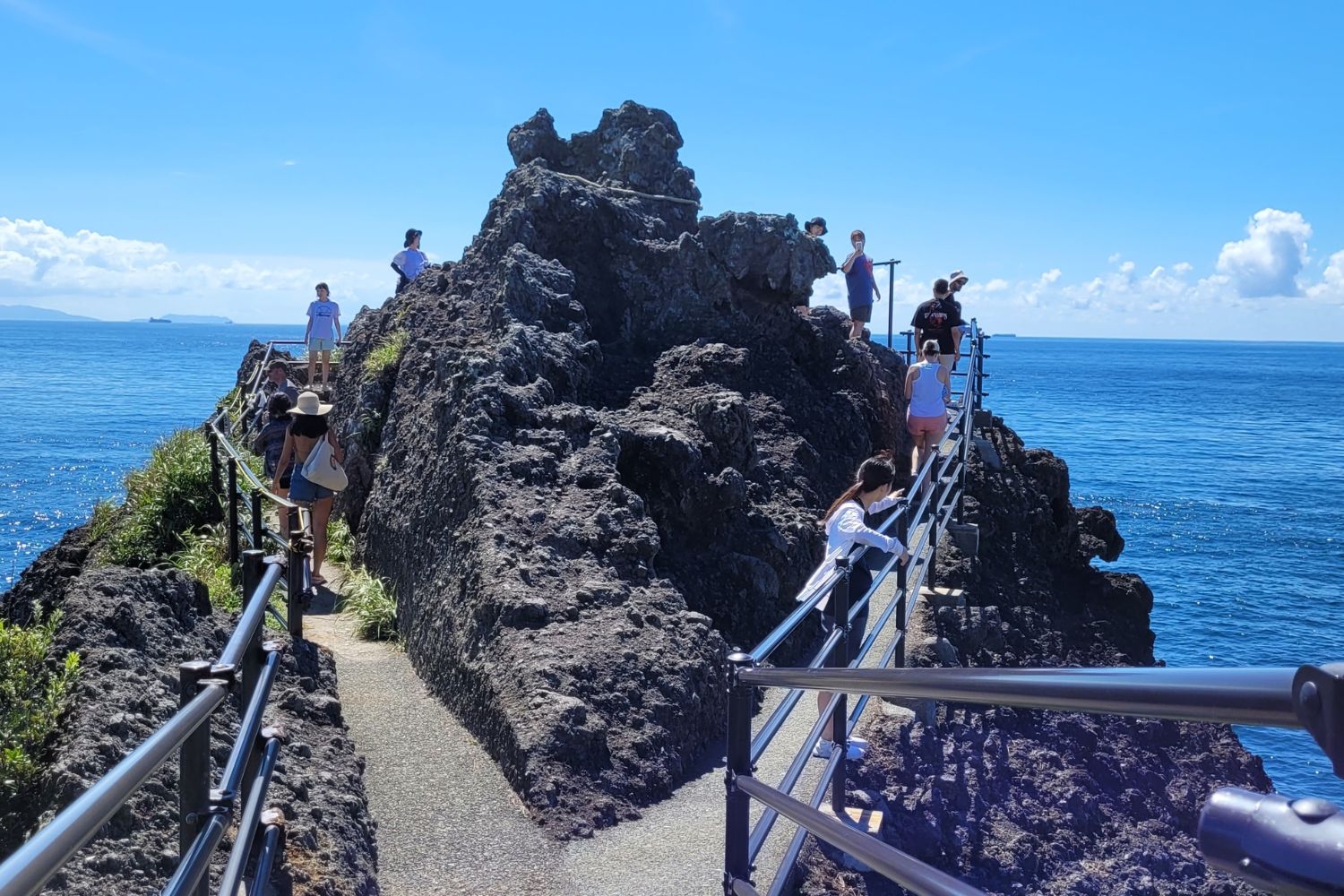
      Izu Peninsula project of IUE students
      Izu Peninsula project of IUE students

      Invited by Shizuoka University of Art and Culture in Japan, 8 students from the Department of Industrial Design of Izmir ...

      Detail
      A ‘robot’ friend for the elderly
      A ‘robot’ friend for the elderly

      Onur Okutur (24), a graduate of Izmir University of Economics (IUE) Department of Industrial Design, has designed a robot named ...

      Detail
      'Respect for History' award for renovation of a 150-year-old mansion
      'Respect for History' award for renovation of a 150-year-old mansion

      Dr. Elif Kocabıyık Savasta, Lecturer at Izmir University of Economics (IUE) Department of Industrial Design, and her husband Dr. Daniele ...

      Detail

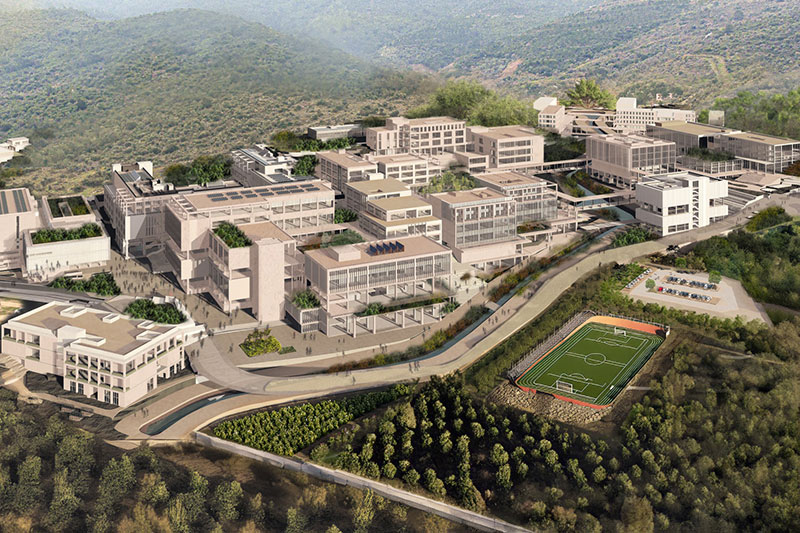
      IZMIR UNIVERSITY OF ECONOMICS GÜZELBAHÇE CAMPUS

      Details

      GLOBAL CAREER

      As Izmir University of Economics transforms into a world-class university, it also raises successful young people with global competence.

      More..

      CONTRIBUTION TO SCIENCE

      Izmir University of Economics produces qualified knowledge and competent technologies.

      More..

      VALUING PEOPLE

      Izmir University of Economics sees producing social benefit as its reason for existence.

      More..

      BENEFIT TO SOCIETY

      Transferring 22 years of power and experience to social work…

      More..
      You are one step ahead with your graduate education at Izmir University of Economics.

      Master Programs Doctorate Programs
      You are one step ahead with your graduate education at Izmir University of Economics.

      Master Programs Doctorate Programs
      Izmir University of Economics
      is an establishment of
      izto logo
      Izmir Chamber of Commerce Health and Education Foundation.
      ito vakfı logo
      Logo

      İzmir Ekonomi Üniversitesi
      Sakarya Caddesi No:156
      35330 Balçova - İzmir / TÜRKİYE

      kampus İzmir

      • University
      • LIFE at IUE
      • CAMPUS LIFE
      • UNIVERSITY IS LIVED IN IZMIR
      • PATENTS
      • CampusIzmir
      • STUDIOS AND LABORATORIES
      • Technology Transfer Office
      • Library
      • Career Guidance Centre
      • Children's University
      • Contact

      İEU © All rights reserved.

      İEU