

- University
- Academic
- Schools/Vocational Schools
- Vocational School of Justice
- Vocational School
- Vocational School
- Department of Banking and Insurance (Turkish)
- Department of Computer Programming (Turkish)
- Department of Foreign Trade (Turkish)
- Department of Graphic Design (Turkish)
- Department of Interior Design (Turkish)
- Department of Construction Technology (Turkish)
- Department of Occupational Health and Safety (Turkish)
- Department of Media and Communication (Turkish)
- Department of Architectural Restoration (Turkish)
- Department of Radio and Tv Programming (Turkish)
- Department of Civil Aviation Cabin Services (Turkish)
- Department of Civil Aviation Transportation Management (Turkish)
- Department of Tourism and Hotel Management (Turkish)
- Department of Applied English Translation
- Vocational School Of Health Services
- Vocational School Of Health Services
- Department of Child Development (Turkish)
- Department of Physiotherapy (Turkish)
- Department of Paramedic (Turkish)
- Department of Opticianry (Turkish)
- Department of Medical Documentation and Secreteriat (Turkish)
- Department of Medical Imaging Techniques (Turkish)
- Department of Medical Laboratory Techniques (Turkish)
- Department of Elderly Care (Turkish)
- School of Applied Management Sciences
- School of Foreign Languages
- Faculties
- Faculty of Arts and Sciences
- Faculty of Fine Arts and Design
- Faculty of Law
- Faculty of Communication
- Faculty of Business
- Faculty of Engineering
- Faculty of Engineering
- Department of Computer Engineering
- Department of Biomedical Engineering
- Department of Electrical and Electronics Engineering
- Department of Industrial Engineering
- Department of Food Engineering
- Department of Genetics and Bioengineering
- Department of Aerospace Engineering
- Department of Civil Engineering
- Department of Mechanical Engineering
- Department of Mechatronics Engineering
- Department of Software Engineering
- Faculty of Health Sciences
- Medicine
- Graduate School
- Common Courses
- Schools/Vocational Schools
- Research
- Research Centers
- Library
- Smart Campus
- Technology Transfer Office
- İzmir Sciencepark
- Continuous Education Center (EKOSEM)
- Children's University
- Ethics Committee
- Teaching and Learning Center (EKOEĞİTİM)
- Psychology Application and Research Center
- Researcher Training Coordinatorship
- Research Collaborations And Innovation Coordinatorship
- Campus
- INTERNATIONAL
- Contact
- 25TH YEAR
FACULTY OF FINE ARTS AND DESIGN
Department of Industrial DesignSuccess Born in the Sea: Reaching the Top with Mussel Shells

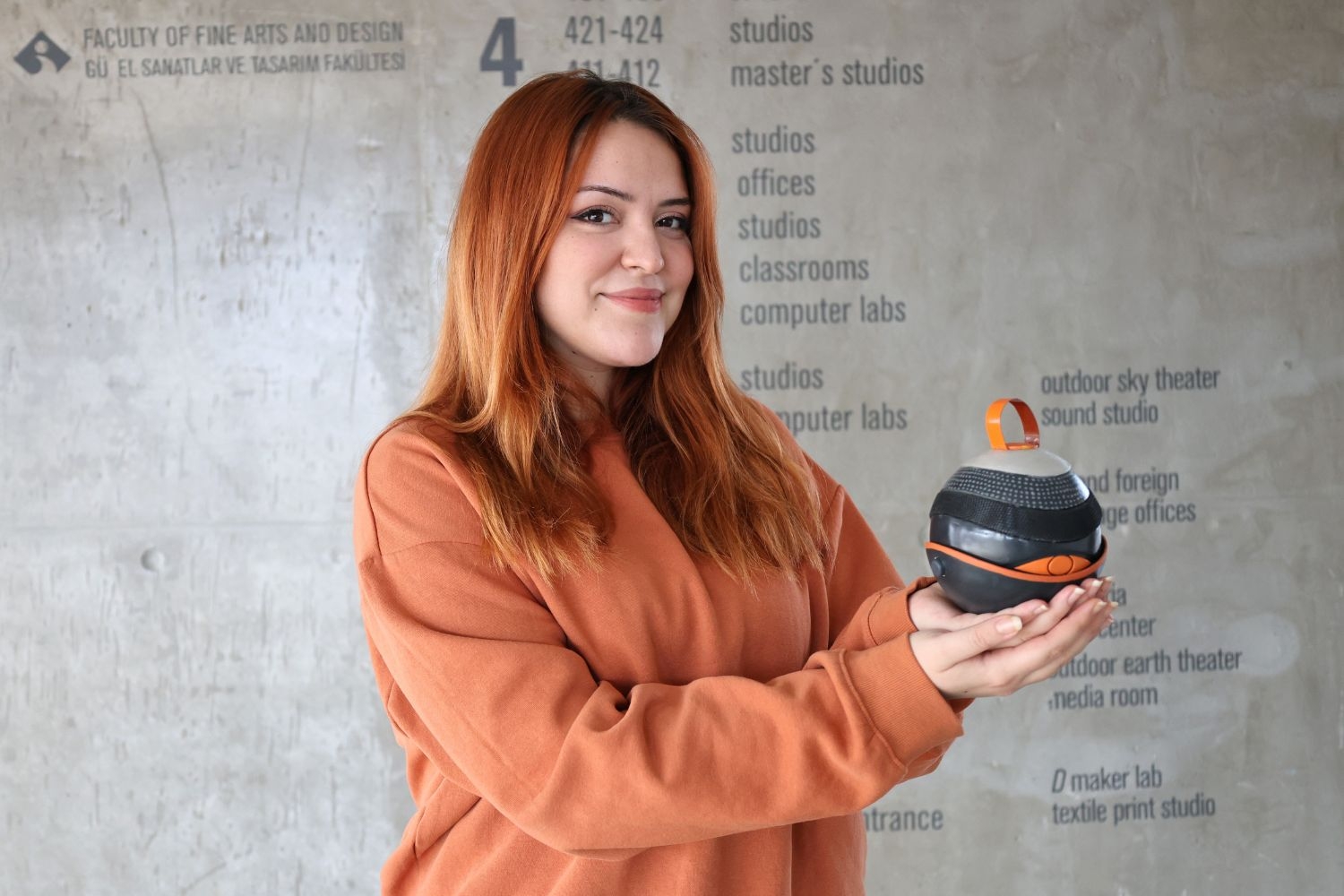
Nermin Sena Özger, a graduate of the Department of Industrial Design at Izmir University of Economics (IUE), crowned her lifelong passion for the sea with major international success. By transforming waste mussel shells into artificial reefs that create new habitats for marine life, Özger secured top honors at the ‘Blue Economy Global Call 2026’, a global competition featuring innovative projects from around the world. Özger won the ‘Coastal and Maritime Tourism and Recreation’ category at the compettion organized jointly by the United Nations Industrial Development Organization (UNIDO) and the World Trade Centers Association, and will receive her award at a ceremony in Rome, Italy, on September 30.
Living in Izmir, Nermin Sena Özger graduated from IUE’s Department of Industrial Design in 2016. Aiming to combine her passion for the ocean with design to produce extraordinary work in the field, she later completed her master’s degree in ‘Design Studies’ at the same University.
MEETING THE SEA IN SEFERIHISAR
Özger, who also works as a diving and sailing instructor, founded the startup NeSea to provide new habitats for marine life. Starting by collecting discarded shells from stuffed mussel businesses, processors, and exporters, she quickly produced four artificial reef prototypes. These prototypes were purchased by IZDENIZ A.Ş. (a subsidiary of the Izmir Metropolitan Municipality) and deployed in Telgraf Bay, located in Seferihisar.
REWARDING HARD WORK
By pioneering an exemplary project aimed at protecting underwater life, Özger’s dedication and hard work paid off on an international scale. Winning first place at the Global Call 2026 competition, which celebrates innovative projects contributing to the ‘Blue Economy’ ecosystem, Özger brought great pride to Turkey.
35 MORE REEFS TO BE PLACED
Stating that the sea is one of the most vital parts of her life, Özger announced that under the TUBITAK 1707 R&D Project conducted alongside IZDENIZ A.Ş., they will deploy 35 additional reefs into Telgraf Bay. She noted that these new additions aim to both reduce waste and transform the area into a new attraction spot for scuba divers and underwater photographers.
“NOT JUST FOCUSED ON AESTHETICS”
Özger explained, “I have had a very close relationship with the sea since childhood. Working as a diving instructor today and putting the ocean at the center of my professional output is really a continuation of that. The industrial design education I received at IUE taught me to look at a problem not just aesthetically, but through function, material, sustainability, and user interaction. That was precisely my starting point when founding NeSea. I focused on questions like: ‘Can a material seen as waste be repurposed? Can it become a new habitat when returned to the sea?’ That’s how the idea of reuniting mussel shells with the ocean as artificial reefs was born.”
“PHOTOGRAPHY ALSO HAD AN IMPACT”
Highlighting that starting underwater photography significantly influenced how the reefs were shaped, Özger said, “I’ve been involved in sailing since childhood, and I was introduced to the underwater world through the University’s diving club. The moment I emerged from my trial dive, I decided to become an instructor. From then on, diving became the center of my entire life. About 5–6 years ago, encouraged by friends, I took up amateur underwater photography. That curiosity forms the core of NeSea today. To capture the right angles without disturbing marine life, you need great buoyancy control, proper air consumption management, and keen observational skills as a diver. I learned something from each underwater cinematographer. Through photography courses, I learned how to use the equipment, compose shots, and observe aquatic life. That's why I started joining underwater photography competitions not as a competitor, but as a dive buddy.”
“FIRST PLACE IN THE FISH CATEGORY”
Mentioning that she participated as dive buddy to photographer Celil Çağlar at the Golden Palette Underwater Photography Turkish Championship, organized by the Turkish Underwater Sports Federation (TSSF), Özger emphasized that their team took first place in the fish category and second place in the mobile device category. Özger said, “Staying at a specific depth and location for a long time to take photos taught me to observe those areas through the eyes of a designer. Understanding which creatures cling to what structures and where they settle, or watching how an octopus builds and camouflages its den using shells and stones, inspired me to develop a design method tailored to both underwater organisms and photographers.”
“AN INSPIRATION FOR DESIGNERS AND ENTREPRENEURS”
Özger concluded: “Seeing something you designed transition from paper or the workshop to actually becoming a living part of the sea is a feeling that is hard to describe. Having this project recognized on an international platform is a deeply rewarding validation of our years of effort. To me, this award is not just a personal achievement; it shows how impactful design-focused solutions can be when protecting the marine ecosystem. Demonstrating that a passion for the sea can yield tangible benefits when combined with the right knowledge, design, and determination, and encouraging young designers, entrepreneurs, and ocean professionals, is just as valuable to me as the award itself.”














NEWSALL NEWS

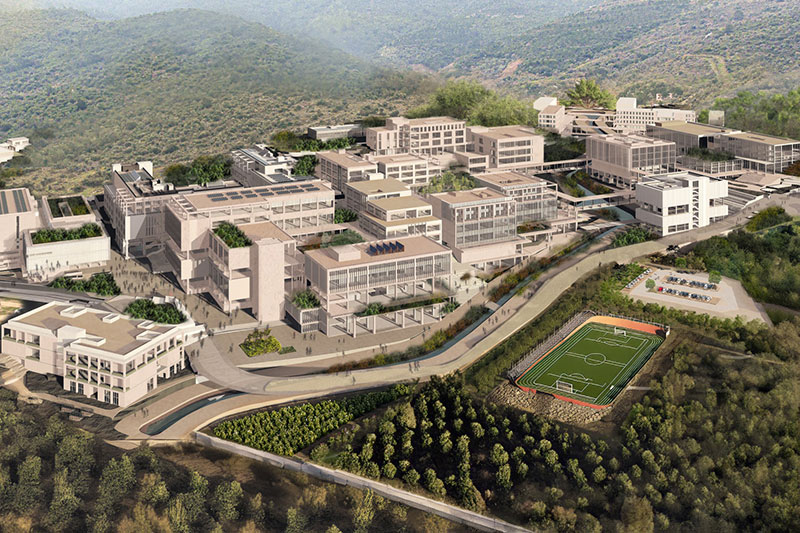
IZMIR UNIVERSITY OF ECONOMICS GÜZELBAHÇE CAMPUS
DetailsGLOBAL CAREER
As Izmir University of Economics transforms into a world-class university, it also raises successful young people with global competence.
More..CONTRIBUTION TO SCIENCE
Izmir University of Economics produces qualified knowledge and competent technologies.
More..VALUING PEOPLE
Izmir University of Economics sees producing social benefit as its reason for existence.
More..
You are one step ahead with your graduate education at Izmir University of Economics.